
Stories / Series · Revenue Systems · November 10, 2026
Sent the Proposal, Heard Nothing Back: What Customers Need to Decide
Why 40 to 60% of big B2B deals end with no decision, what goes into an irresistible proposal, and why you should present it instead of just sending it.
 Written by Markus Eilers
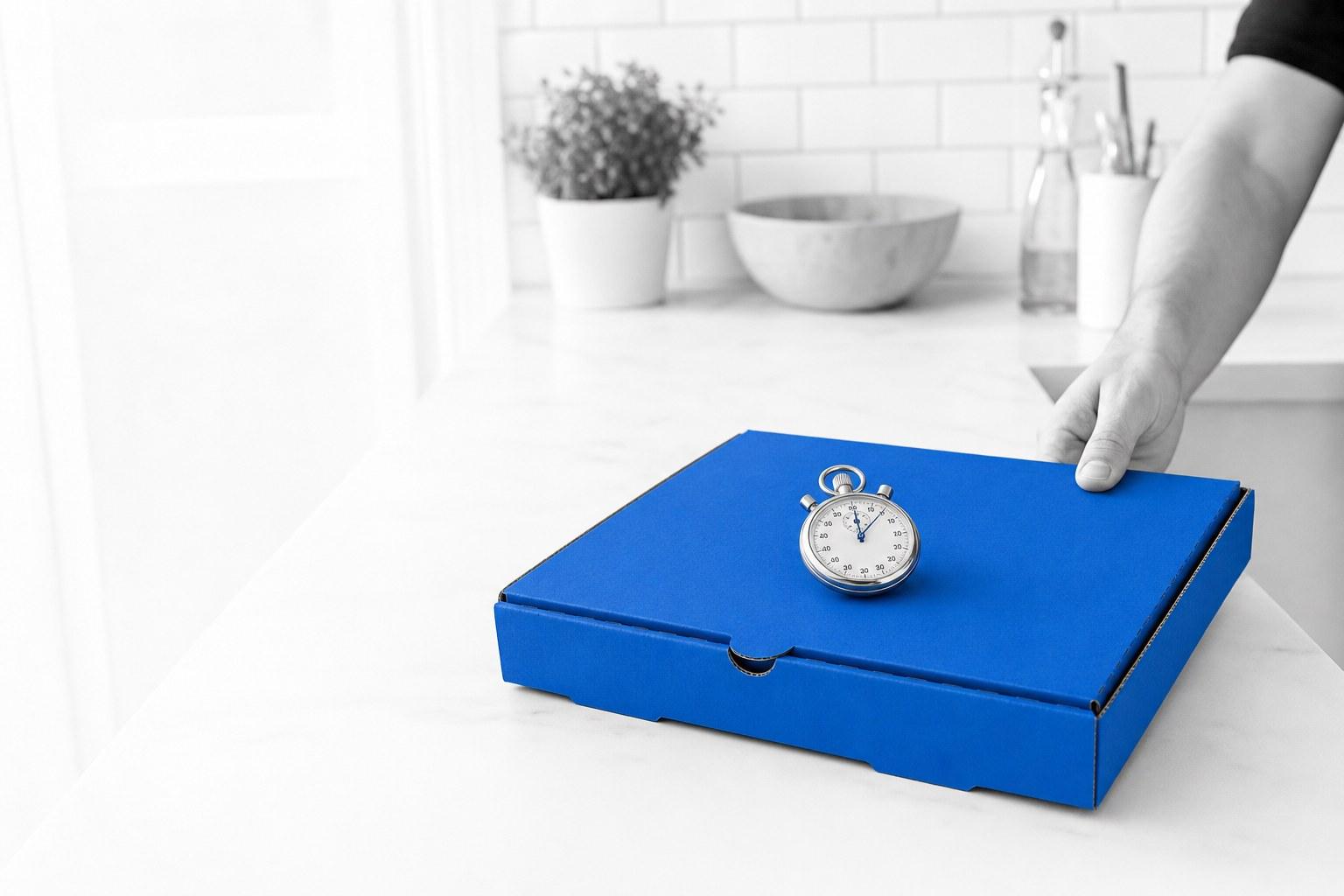
52 open deals
Winfried Windt has 52 open deals in his system. He’s already sent each of these customers a proposal.
It’s always a treat to look at these proposals. Winfried has zero hesitation about firing off PDFs that look like a company flyer with a parts list.
One of my favorite things about CRM systems? They use this as the basis for a forecast.
How many deals from that forecast go nowhere?
40 to 60% of important deals die because no decision is made.
Of the remaining half, Winfried wins 24%. That’s a total loss rate of 88%.
For many companies, that’s a real problem. Their salespeople aren’t actually selling.
Sit in the customer’s chair and it’s obvious. An uncertain mind makes no decisions. Reality catches up with every forecast soon enough.
What does a pizzeria have to do with B2B proposals?
You’ve probably seen a ton of proposals in your life. How many were truly irresistible?
This all started with a pizza place. Domino’s had a slogan: “30 Minutes or it’s free.” People ordered like crazy—because it was easy and fast.
Then Domino’s found out that seven out of eight customers actually hated the pizza.
Knowing your customer’s real priorities? That’s a sales superpower.
What goes into an irresistible proposal?
The real question: How do you make the value crystal clear, the path to the goal obvious, and your proposal so compelling that not buying would feel weird?
Leya Lauscher, Winfried’s opposite number, uses five ingredients in every proposal. Not one of them is price.
Want to build these in, step by step? Our blueprint for irresistible B2B proposals lays it all out in eight steps. It’s free: eilersfriends.com/frameworks/b2b-angebote.
Why present a proposal instead of just sending it?
A proposal without a conversation is like a script with no actors.
That’s why we call the conversation the Recommendation. If you pitch, you’re selling. If you recommend, you’re advising. The customer’s in the driver’s seat.
There are seven stages to this.
1. Permission to say no. Up front, you say something like: “If at any point you feel this isn’t a fit, just tell us. No is totally fine. There could be a hundred good reasons, and all of them are valid.” When people are allowed to say no, they stop defending themselves.
2. How did we understand you? Goals, hurdles, evidence, and impact from the discovery call—in the customer’s own words, if possible. Then ask them to confirm.
3. You are not alone. Others have had the same problem. Others have solved it.
4. Customer stories. Two or three, matched to the customer’s situation, each with outcomes.
5. The first Trial Close.
It has to be a yes/no question. Yes means green light: the customer wants to know and is ready for a real conversation. No means something’s off—usually an unanswered question. No big deal. Just address it.
6. The Bulletproof Plan. Three, six, or nine clear steps: What happens now, and how do you reach the summit? Each step should spark curiosity and have its own value. Then, the second Trial Close:
7. The proposal. It answers seven questions. What’s the goal? What exactly do you get? When will you get it? What do we need from you? What results are possible? What guarantees do we offer to reduce your risk? And what’s your next step?
You can get the script with transitions as a template: eilersfriends.com/frameworks/recommendation-pitch.
What does AI do for proposals?
In part one of this series, our AI Determine got a name and a company. In part two, it listened in on the discovery call. For the proposal, it gets only the full transcript of that conversation.
From there, it writes the summary “How did we understand the customer?” and preps the content for a proposal that matches the customer’s stated needs 100%. It picks the right customer stories and lays out the stages of the conversation.
AI for relevance and irresistibility. The work sales teams spend 50 to 60% of their time on—just doing admin.
What does this mean in numbers?
Leya gets 54 to 75% of her customers to accept her proposals. That’s four to six times more than Winfried.
Here’s why, in three lines:
- Customers buy because of what they can achieve.
- Customers buy what they fear least.
- Customers buy where they feel understood.
What can you do this week?
And Olli?
After the six questions from part two, Olli had given me a ton—and I’d given him nothing. That was on purpose. It let me tie my proposal 100% to what he actually needed.
I could have sent him a 43-page document. That would’ve been torture.
I did three things instead.
I repeated the value: “This is what you want to achieve. Still right?”
I showed a clear path. Six steps others have already taken.
And I took away the uncertainty: Here’s how we remove the risk, Olli, and make sure it works.
Olli invested. The same guy who, back in 2001 in Munich, nodded politely and headed for the coffee bar.
He hadn’t changed. The conversation had. Curious enough to listen. Understood enough to trust. Certain enough to act.
Curiosity, Connection, Certainty. Get those right, and you’ll be surprised how many people convince themselves.
The framework behind it
Der Bauplan für unwiderstehliche B2B-Angebote
Blueprint plus trained AI agent. Free of charge.
Feedback on your proposals
Are your proposals leading to decisions? Let’s take a look together.
Written by
Markus Eilers
15+ years in B2B sales. Has helped more than 500 founders and leaders build repeatable revenue systematically. Every Thursday he writes down what he learned in coaching that week.
More from Revenue Systems


Comments
- No comments yet. The first one is always the hardest.