
Stories / Series · Revenue Systems · November 10, 2026
B2B Cold Outreach: Why Curiosity Wins More Conversations Than Any Product Info
Why B2B teams ambush decision-makers with info dumps, what a deck chair in Italy has to do with it, and how a single question can open up the conversation.
 Written by Markus Eilers

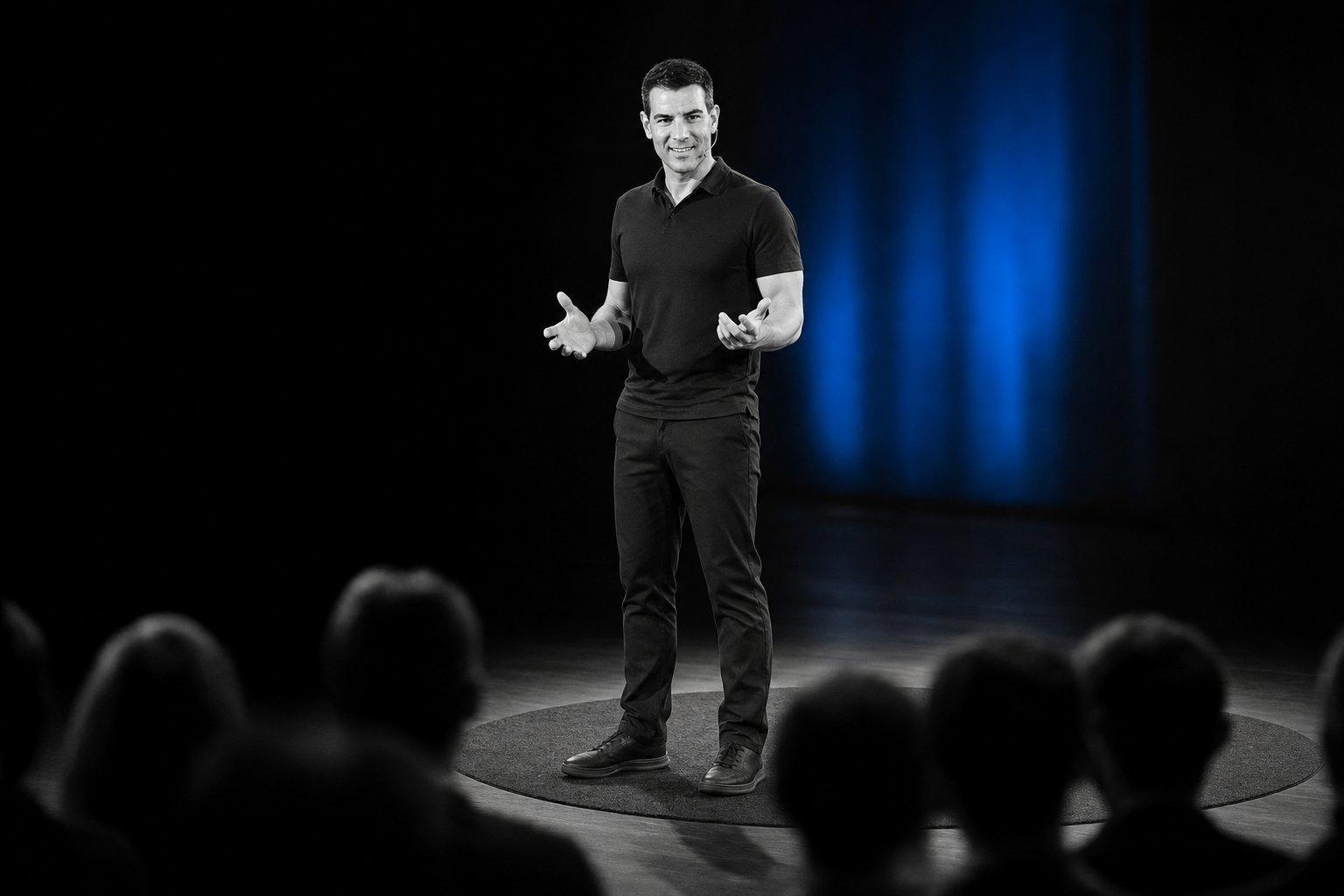
This series builds on my talk at TEDxTUDarmstadt. If you’d rather watch than read, here it is.
Munich, 2001: “Coffee, anyone?”
Back in 2001, I was a computer science student at a software conference in Munich. Lots of great speakers. But I was there for one guy: Olli.
Olli ran a tech company with 500 people. He had access to budgets and teams—everything my idea needed. The air smelled like stale coffee and ambition, and I had a plan: catch Olli after his talk, pitch my idea.
Olli stepped off stage and walked straight into the little circle I was standing in. He sighed:
Then he looked at us.
I had the idea. My heart was pounding. I took a breath and said:
Olli stared at me. Polite, very confused nod.
And he was gone.
You could say: at least I tried. True. I tried to chase off a stranger with an explanation.

What happens today when sales wants attention?
Same thing. Just automated.
I’m sitting at my desk, laughing at a new LinkedIn message. It’s the sixth one from the same sender, and it goes:
I’m tempted to reply that I’m the son of the late Nigerian finance minister and I’ve got two of those $20 million packages left. No one replied to me, either.
I get the effort. Every company lives off sales. What bugs me most about these messages? The obvious lack of interest in the person on the other end.
What three misconceptions drive these messages?
I like to roll all these sellers into one character. Meet Winfried Windt. Extrovert. Full of confidence. Loves to explain.
Winfried’s heard that Social Selling is the new way. He believes three things:
- The other person just loves digging into his stuff.
- Social Selling means Selling on Social: dust off the old pitch deck and blast it out in robo-messages.
- He can hide his real intent. “I’m not here to sell you anything. Promise.”
Number three? Busted by the recipient’s BS radar. Here’s the kicker: sellers dream of the best, most generous clients with the coolest projects—then expect those same people to fall for the oldest tricks in the book.
Here’s the math: In the old system, it takes up to 3,000 messages to land a single lucky hit. Only 24% of professional sellers hit their targets. We don’t get better by cranking out more of the same dysfunctional behavior, just faster.
If you lead a team, here’s the second takeaway: We expect activity and results, but haven’t prepared or trained the team for either.
A deck chair in Italy
A few years after Munich, I was 27 and building my first companies. I’d botched so many intros, I’d lost count. I was tired. Tired of talking people into my ideas. Tired of confused faces.
I’m sitting in a deck chair at a beach club in Italy. The sun’s setting, the air smells like olive oil. For the first time in ages, I’m enjoying doing absolutely nothing.
Crash. Someone bumps into my chair.
I turn. Olli. Linen shirt, half his drink spilled. He grins:
He’d totally forgotten Munich. My work brain was on vacation. So I gave him the shortest answer I could think of, hoping to get back to my hard-earned laziness:
His eyes lit up. He leaned in. He fired off question after question. Twenty minutes later, he wanted in.
I had no idea what just happened. I’d literally given him nothing.
Why does less info spark more interest?
We’ve got maybe eight seconds to grab someone’s attention. And even if your product is genius, customers aren’t waiting around, desperate to find you and bang down your door.
What do people care about most? Themselves.
That line in the deck chair did two things. It was about Olli’s world—tech companies and innovation. And it left almost everything open. Olli was on an info diet, and his curiosity did the rest.
The opposite of Winfried is Leya Lauscher. Leya’s super curious and quick on her feet. She thinks her shyness is her big weakness. She doesn’t always know what to say to get people talking. But she does know:
- There’s a reason Social comes before Selling. Social means acting like a human being.
- The goal right now is just one thing: start a conversation.
- Relevance beats frequency.
Leya needs 200 contacts for one lead. Sounds rough. Not ideal. But it’s a fraction of 3,000.
How do you craft a question that sparks curiosity?
The formula’s simple: “I keep wondering why …” plus a classic headline, with a question mark at the end.
Every good headline promises something the reader wants to know. Turn it into a wondering question, and you’ve got a pitch-free conversation starter.
Three rules to go with it:
- The question is about the other person’s world. Your product stays out of it.
- No solution in the question. If you give the answer, curiosity dies.
- Then stop. Controlled exit. Wait for them to want more.
What does AI do at this stage?
In my talks, our AI is called Determine. For this first step, it gets just two things: the contact’s name and company.
Then it researches what this person cares about. What do they post? What questions do they ask online? What signals do they leave on the web? From what it finds, it crafts a question in the same style Olli heard in the deck chair. Then it does the controlled exit—and waits.
With enough discovery calls to learn from, this kind of AI can write a day in your future customer’s diary better than they could themselves.
There’s a limit, though. Anything that feels weird or fakes intent—we avoid like the plague. AI amplifies who we are. Be real and let AI support that.
What can you do this week?
And Olli?
He was curious in the deck chair. Not convinced yet.
In the end, he invested. But two ingredients were still missing—and I didn’t figure out the first until years later, at our third meeting. It’s made up of six questions.
The framework behind it
Instant Influence: Win Customers in Your First Conversation
Blueprint plus trained AI agent. Free of charge.
Outreach feedback
Is your first message sparking curiosity? Let’s take a look together.
Written by
Markus Eilers
15+ years in B2B sales. Has helped more than 500 founders and leaders build repeatable revenue systematically. Every Thursday he writes down what he learned in coaching that week.
More from Revenue Systems


Comments
- No comments yet. The first one is always the hardest.