
Stories / Series · Transformational Leadership · November 10, 2026
Will AI replace leaders? What’s left once the automatable is gone
AI is better than many leaders fear. What’s left once the automatable parts are gone, and why confidence is part of it.
 Written by Aljona Eilers

A pack of cigarettes and five espressos
In part one, a SWAT team stood outside my door in Moscow. The morning after, my late mother's team was waiting for me.
Before the meeting I smoked almost a whole pack and drank five espressos. I practiced how I would stand. I figured out where to put my notes so nobody would see my hands shaking.
Then I said a sentence that hid none of it. More on that in a moment.
The silent crisis
We're living through the biggest change in work since the Industrial Revolution, and artificial intelligence sits right at its center.
The question is no longer: “Will AI affect my job?” It's: “What's left once the automatable parts are gone?”
That exposes a silent crisis that has been smoldering for years. The crisis of mediocre leadership. And the punchline: the leaders who most need to hear this are usually the last to realize it's about them.
Gallup showed it long ago. In a survey of 7,272 US adults, one in two had quit a job at some point to get away from their manager (State of the American Manager, 2015). It looks as if a large share of managers could be replaced by AI, and their teams wouldn't care.
I see it all the time. Angry, impatient CEOs call me and say: “Fix my team. It's not working right.” I look at them and think: I wonder why.
When nobody wants to follow anymore, when teams go quiet and the best people leave, that's not a talent problem. It's a leadership problem.
What AI does better
We're told AI is a tool. That's true. For many of us, it has very quickly become much more.
It's never tired and never in a bad mood. It never accidentally adds strangers to a confidential Signal chat. It doesn't need snacks.
AI is much better than most leaders fear. And too many leaders are much worse than they hope.
There's one thing AI still can't do in a world where it gets smarter every day: lead us through fear, chaos and crisis the way extraordinary people can. In a world of perfect machines, the leaders who count are the ones who are extraordinarily human.
The second spark: unshakeable confidence
Great leaders create unshakeable confidence in their teams.
I don't mean arrogance. I mean the confidence that says: “I don't know the way. I'm sure we'll find it together.” It makes the unknown bearable. It's not about having the answers. It's about calming the chaos.
When Captain “Sully” and his crew decided to land Flight 1549 on the Hudson River, his radio exchange with air traffic control was calm and precise:
He didn't shout. He didn't panic. He radiated confidence. His confidence, and his crew's, in the face of the unthinkable saved 155 lives.
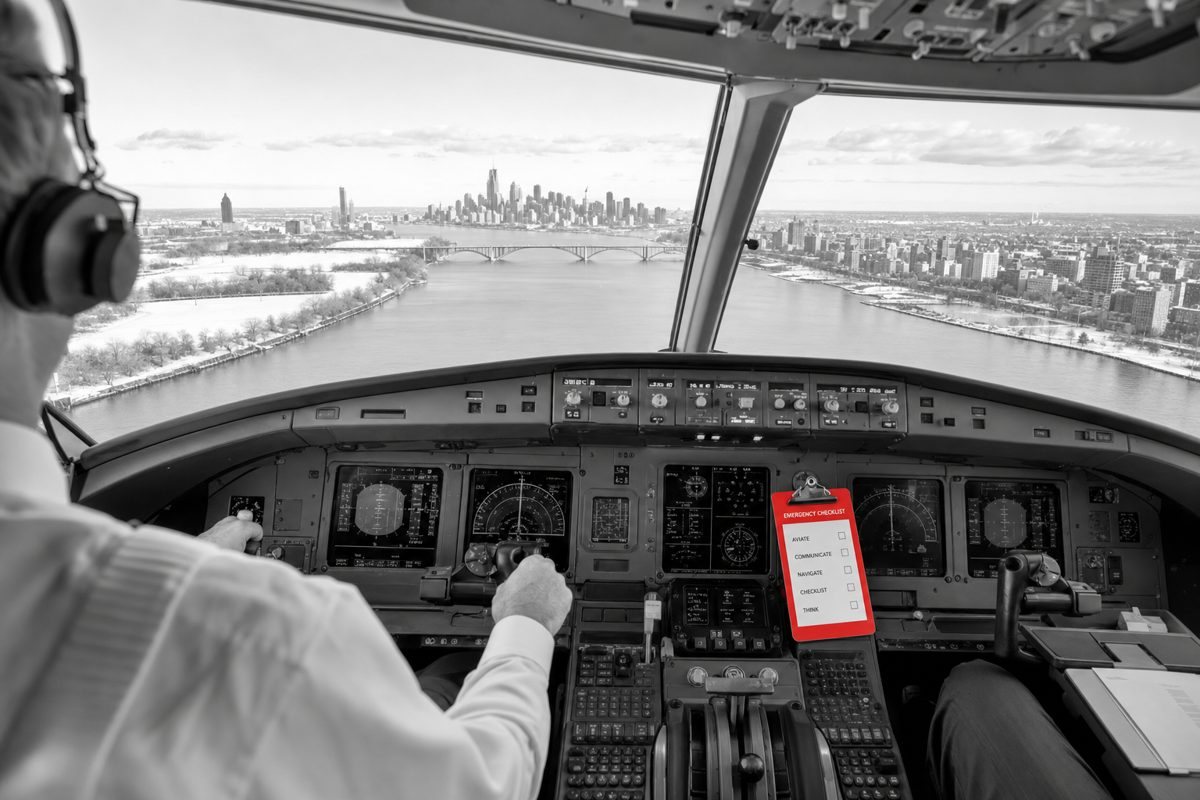
AI can send you a “You've got this!” message. It doesn't sit with you in a spinning plane.
My sentence that morning in Moscow was the same spark, just smaller: no answers, and the certainty that we would find the way. Together.
How much of leadership stays human in the end?
There's a calculation for that, and it ends at 25 percent. Add the third spark, the one you feel fastest, the moment someone walks into a room: part three.
If you're standing in front of a team right now and don't know the answer: in Liquid Leadership, my program for leaders, that's exactly what we practice. Everything about it, plus the free strategy call: eilersfriends.com/liquidleadership
Liquid Leadership
Confidence without knowing the answer. We practice it in twelve sessions.
Written by
Aljona Eilers
TEDx speaker, bestselling author, former Bolshoi ballerina. Helps leaders in technology companies lead a team that people want to follow.
More from Transformational Leadership

Comments
- No comments yet. The first one is always the hardest.